Place name · c. 1830
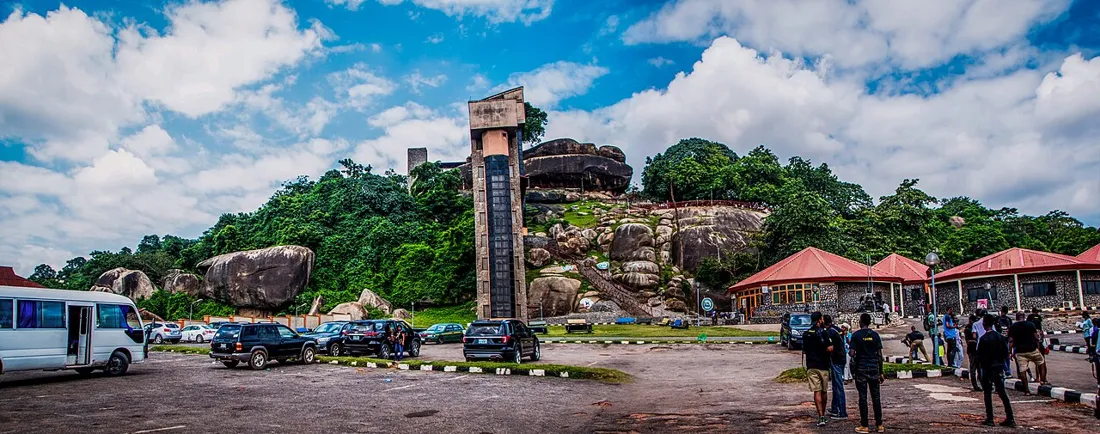
Image: Olumo Rock, Abeokuta.jpg — Adedayo Adesilola, CC BY-SA 4.0 · source
Fleeing war, the Egba found shelter beneath a great granite rock and named their new home after it.
In the early 1800s, the old Oyo empire was falling apart and Yorubaland was torn by war. Egba towns in the forest were raided and destroyed, and thousands of people had to flee.
Around 1830, led by a hunter-warrior named Sodeke, the Egba refugees found a huge outcrop of granite rising from the land. Its caves and crevices gave cover from attackers and a clear view of anyone coming.
They built their town around it and called it Abeokuta, 'under the rock'. The rock itself is called Olumo, often explained as 'God has moulded' or 'the Lord has ended our suffering'.
Sodeke was a practical leader. Under him, families from many destroyed Egba towns settled together around the rock but kept their old town names for their new quarters, so Abeokuta became a federation of townships inside one city. That pattern still shapes the city's districts today.
The new town had to fight to survive. In 1851 the Egba beat back a major attack from the kingdom of Dahomey, a victory still remembered with pride. Missionaries and returning freed people from Sierra Leone also arrived in these years, and Abeokuta became one of the early centres of Western schooling in Nigeria.
Olumo is now one of Nigeria's best-known tourist sites. Visitors climb through rock passages and up carved steps, or ride a lift, to a summit where the whole of Abeokuta spreads out below: rusty roofs, church towers, mosques and the Ogun River. Guides show the hollows where people once hid, and shrines that are still in use.
The rock remains a sacred place for the Egba, and the yearly Lisabi festival remembers Lisabi, the Egba hero who led the earlier fight for freedom from Oyo. Standing up there, it is easy to see why frightened families saw this rock as a fortress sent by heaven.