Lost history · 1903–2016
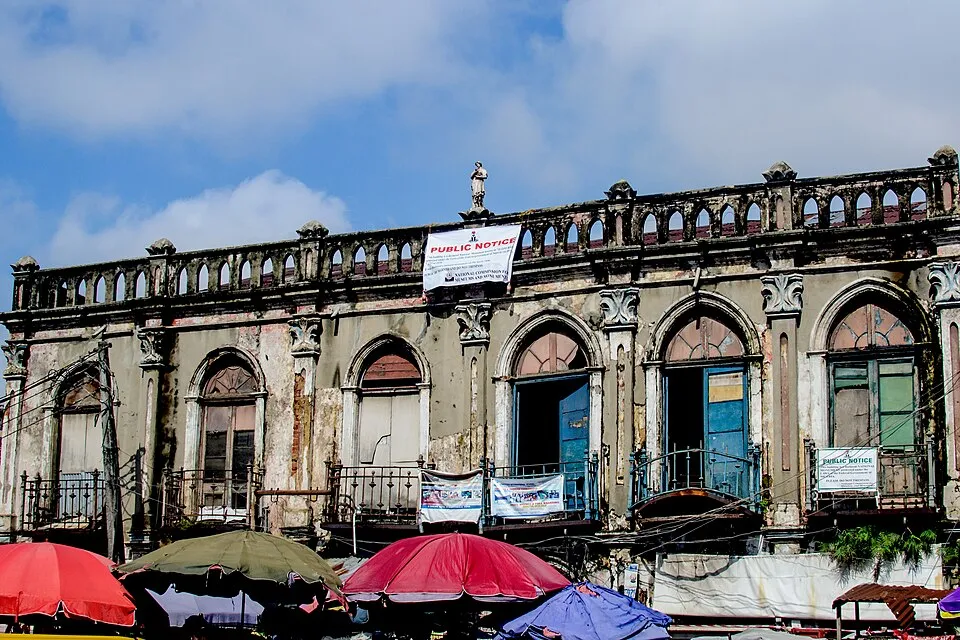
Image: Ilojo bar.jpg — Epicy, CC BY-SA 4.0 · source
For years Lagos was told this lovely old house dated from 1855. A patient researcher found out the truth, after the house was already gone.
If you walked across Tinubu Square on Lagos Island before 2016, you may have noticed a tired but beautiful two-storey house. It had arched windows, carved plaster around the doors, and a long balcony. Many people knew it as Ilojo Bar. Guides would tell you it was one of the finest examples of the Brazilian style in Lagos, built by people who had come back from slavery in Brazil and Cuba.
For a long time the story told about it was simple. It was built in 1855, so people said, by a family called Fernandez, using the skills of Afro-Brazilian returnee builders. It was even declared a national monument in 1956, one of the very first buildings in Nigeria to get that honour.
Here is the surprising part. In 2021 a Dutch-Nigerian writer named Femke van Zeijl wrote a master's thesis at Leiden University called The Curious Case of Casa do Fernandez. She went back to old land papers, newspapers and photographs. What she found did not match the famous story.
The house, she showed, was really two houses joined together, and it was built roughly between 1903 and 1914, not in 1855. The right half belonged to a trader called José Amoedo Fernandez. He came from Galicia in Spain. He was not a returnee from Brazil at all. The left half, the part that later became Ilojo Bar, first belonged to another man, Vicente Guedes. Fernandez bought that half in 1903, and in 1914 he sold the whole building to Napoleon Rey Couto.
So the house was real, and it was lovely, but the neat story about 1855 seems to have grown up later, as people repeated what they had heard.
In 1933 the building was bought by Alfred Omolana Olaiya, a businessman from Ijesha land. He named it after his home town, Ilojo, and ran a bar there. The name stuck so well that most Lagosians never knew it had ever been called anything else. Olaiya, by the way, came from a family that would later give Nigeria the famous highlife musician Victor Olaiya.
Old buildings need care, and this one did not get enough. By the 2000s it was crumbling. Then, on the night of 11 September 2016, part of it was pulled down by people who wanted the land. Lagos woke up to a pile of rubble on Tinubu Square. There was anger, the state government promised action, and newspapers around the world reported the loss.
The sad lesson is double. Lagos lost a real piece of its past, and it also learned that the story it told about that past was not quite right. A good house deserves a true history, and thanks to careful research, this one finally got it, even if too late to save the walls.
Why does a date matter so much? Because when we get the story of a building wrong, we also get wrong the story of the people who lived in it. The old version made Ilojo Bar a symbol of the returnees from Brazil, and those returnees really did shape Lagos. Their builders left churches, mosques and houses all over Lagos Island. But this particular house had a more mixed story, with Spanish, Portuguese-speaking and Yoruba owners all playing a part.
That mix is, in a way, even more Lagos. The city has always been a place where traders from many lands met, argued, built and sold to one another. Today, if you stand on Tinubu Square, you will find no trace of the house. The photo on this page was taken on 7 September 2016, just four days before the house was knocked down. Pictures like it are almost all that remain.