Lost history · 1960s to present
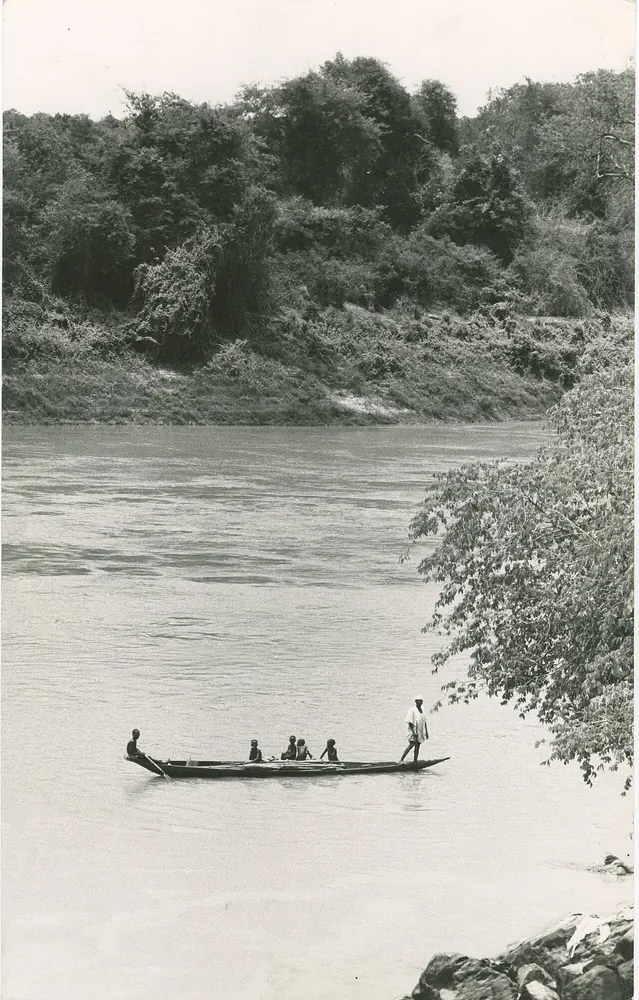
Image: Photo View of the Niger River upstream from Kainji, near the location downstream of Bussa 1964 - Touring Club Italiano BBH 342.jpg — Unknown author, CC BY-SA 4.0 · source
Bussa gave up its old home for a lake that powered Nigeria, then struggled for decades to keep its own taps running.
Old Bussa was the heart of Borgu. It had an emir, a market, farms along the Niger and craftsmen in its lanes. It was also, by the 1960s, in the way.
Nigeria was building the Kainji Dam to make electricity for the whole country. Holding back the Niger would create a huge lake, and Bussa sat right where the water would go. In 1968 its people packed up and left. Through 1968 and 1969 the lake filled. Old Bussa disappeared under it.
It was not alone. Across the lake basin about 50,000 people lost their homes and land.
The planners built a replacement called New Bussa. It had neat family compounds, a new palace for the emir and public buildings in the middle of town.
A house is not a living, though. Researchers at the time found farmers starting their farms from scratch on unfamiliar land. The new lake was full of fish, but fishing needs boats, nets and a road to market, and many families had none. Learning to live beside the lake took years.
And then there was water. New Bussa sits beside one of the biggest bodies of fresh water in West Africa. Yet when the town's waterworks broke down, residents went roughly 30 years without water from their taps. They dug wells, sank boreholes and bought from water sellers, while the lake shone just outside town.
Eventually the waterworks were repaired and the taps ran again. People were glad. A community leader added a request: please keep it working this time.
New Bussa is still the seat of the Emir of Borgu. Its old streets lie somewhere under the lake that lights Nigeria's homes. Its people kept their part of the bargain. They are still waiting to see if the country keeps its part.