People · 1880-1906
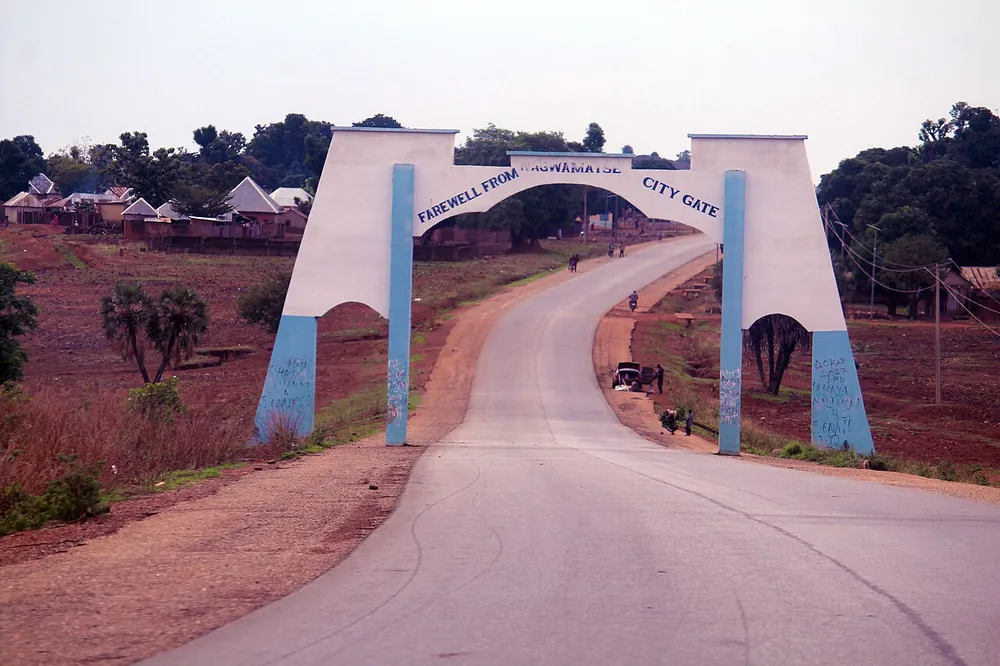
Image: Nagwamatse City Gate, Kontagora.jpg — Kambai Akau, CC BY-SA 4.0 · source
British troops hunted down Kontagora's slave-raiding emir, then returned him to power under their own conditions.
Kontagora, in today's Niger State, was founded by a conqueror, Umaru Nagwamatse. His sons ruled after him. In 1880 one of them, Ibrahim Nagwamatse, became emir.
Ibrahim ran Kontagora on slave raids. His horsemen rode out towards the Niger and into the Zuru country, fell on villages and carried people away. British officers later described whole districts emptied and towns in ruins. They had their own reasons to paint him black, but the raids were real, and so were the families who lost people to them.
In January 1901 British troops marched into Kontagora. They said he was raiding lands under British protection and threatening their post at Jebba. Ibrahim fled, and kept raiding from the bush.
In February 1902 a British column set out from Wushishi for his camp at Kaya. Horsemen rode ahead to cut off his escape. The camp was empty, but they caught up with his column and drove it back into the main force. Ibrahim was captured with most of his chiefs and thousands of followers.
That should have been the end of him.
It wasn't. By 1903 the British had put Ibrahim back on his throne. Accounts differ on the details. One says he was released in 1903 and formally named emir again in 1906.
There were conditions. He had to accept British rule, and he had to stop slave raiding. In return he got his title back.
Why bring back a man they had hunted? Because this was how the British ran northern Nigeria. Indirect rule needed rulers, and an emir people already obeyed was cheaper than an army.
So the slave raider of Kontagora ended his days as a British official. Nobody asked the villages he had raided what they thought.