Lost history · 1806
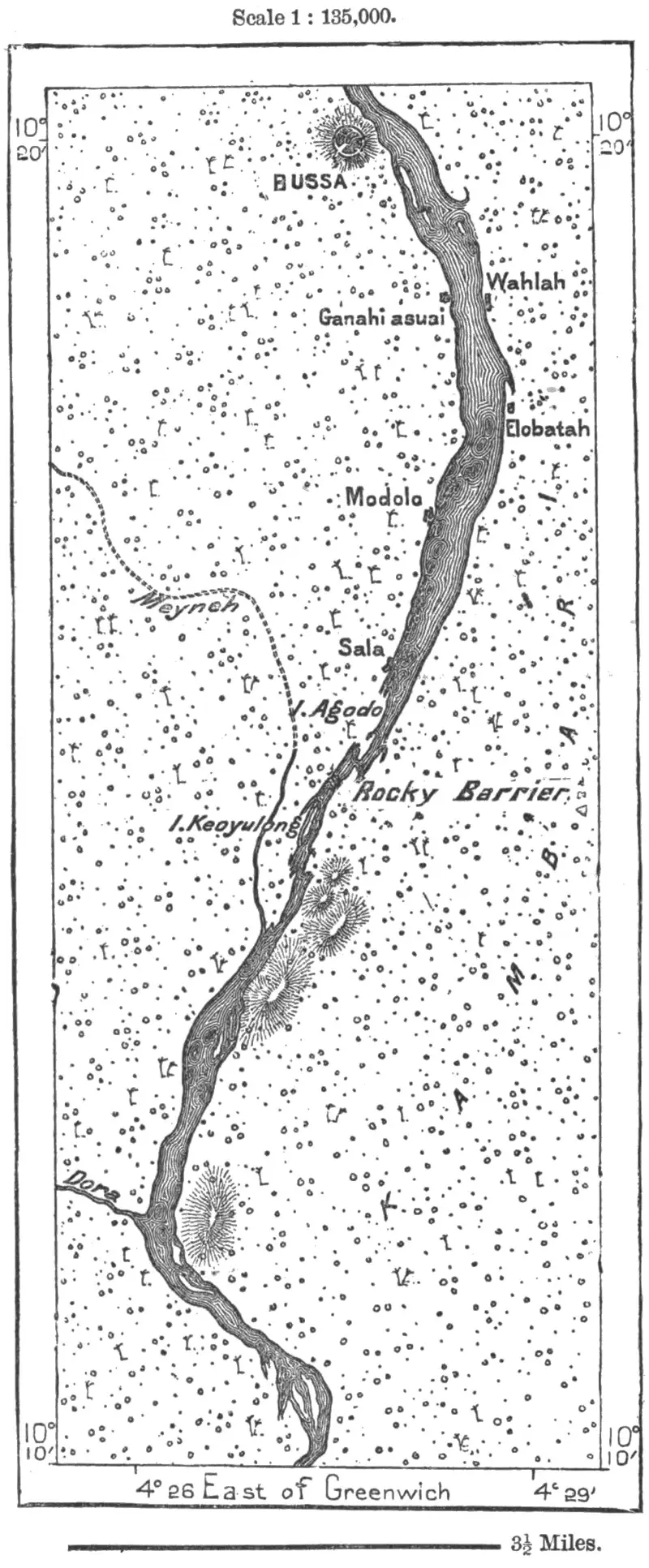
Image: AFR V3 D342 The Bussa Rapids.jpg — Élisee Reclus, Translated by Augustus Henry Keane, 1833-1912, Public domain · source
Mungo Park died at Bussa, but an enslaved survivor helped carry the story beyond a river town later swallowed by a reservoir.
In 1805 the Scottish explorer Mungo Park came back to West Africa with one aim: follow the Niger all the way to the sea. Fever killed most of his men before they even got going. Park and the survivors built a boat, the Joliba, and pushed off downstream.
He sent his last letters home with a guide called Isaaco. He told his wife he expected to reach the coast early in 1806.
The Joliba did not stop to make friends. Park's party fired on canoes that came near them. They were passing through other people's country, and the people noticed.
Near Bussa, in Borgu, the Niger squeezes between rocks. Here, early in 1806, men on the shore attacked the boat with spears and arrows. Park's men fired back. Finally Park and his companions jumped into the river to escape. They drowned.
One man was left in the boat, an enslaved African whose name was never written down. He shouted to the attackers to spare him. They did, and took him and the boat.
We know the story because of him. He told it to Amadi Fatouma, a guide who had left the expedition shortly before. Years later Isaaco came looking for Park and wrote down what Fatouma said.
Nobody is sure why Bussa attacked. One account blames a go-between who kept gifts that were meant for the local king. Another says the people of Bussa took the armed strangers, who had been shooting their way down the river, for invaders.
Old Bussa is gone now too. In 1968 the Kainji Dam flooded it, and its people moved to New Bussa. The rapids where Park died are under the lake.
Park's name is in every history book. The man who survived and told the story is not. Without him, Park would just have vanished.