Custom · 1960s and older roots · Disputed
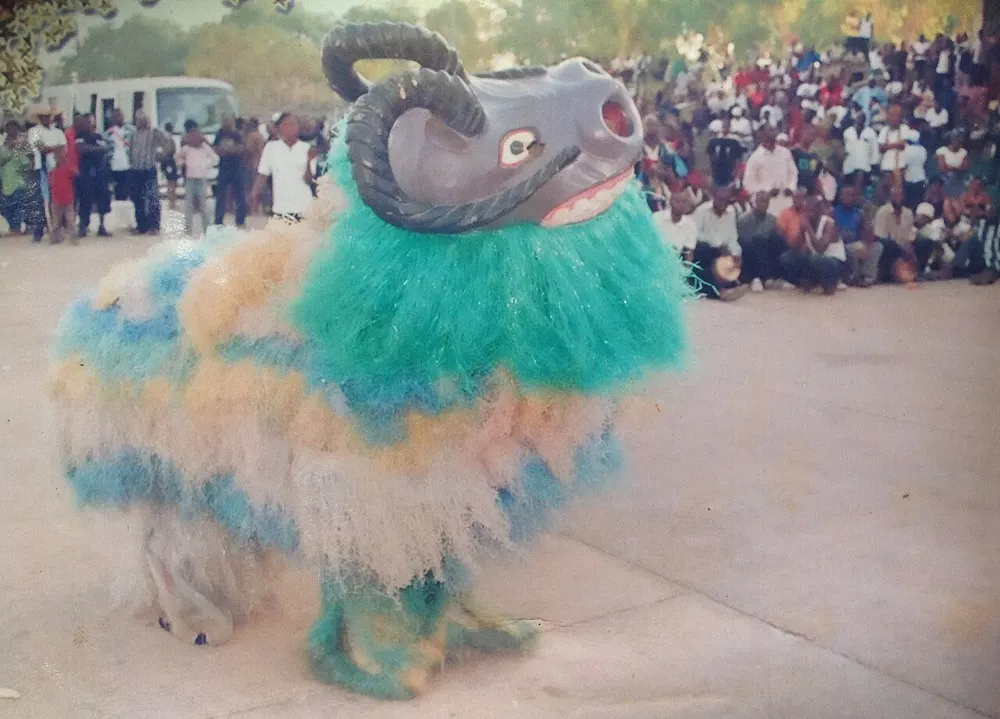
Image: Kwagh-hir animated character.jpg — Bemmax, CC BY-SA 4.0 · source
A Tiv performer said spirits showed him a new theatre, but its roots reach into the stories families already knew.
In December 1960, so the story goes, a Tiv man named Adikpo Songu was walking home near the Orkoor River when he heard music.
He crept up and hid behind some bamboo. In a clearing, drummers were playing, dancers were dancing and puppets were moving, with two troupes trying to outdo each other. Songu realised the performers were adzov, spirits. He watched until he fell asleep. In the morning there was nothing there, not even footprints.
He believed the spirits had chosen him to bring their theatre to people. He went home to Akpagher, in today's Gboko area of Benue State, and started making it. It became known as Kwagh-hir.
Long before 1960, Tiv families gathered after a day on the farm for kwagh-alom, evening storytelling. A good storyteller could hold a whole compound, and every tale had a lesson in it.
Kwagh-hir gave those stories bodies. Instead of hearing about a greedy hyena, you saw a carved hyena, built by a carver, worked by a puppeteer, while drummers played and masked dancers moved around it. The evening tale became a show the whole village could watch.
That is why the theatre scholar Iyorwuese Hagher doubted that one man invented it in a single night. Kwagh-hir grew from skills and stories the Tiv already had. Songu may well have been the spark. The fuel was much older.
Kwagh-hir is funny, and that is its power. A puppet can play a crooked tax collector or a greedy chief, and the crowd can laugh at him in public, which they could never do to the real man. Hagher saw it as a way for Tiv farmers to push back against people who oppressed them.
In 2019 UNESCO added Kwagh-hir to its list of the world's intangible cultural heritage. Whether spirits taught it or not, it survives because people keep carving, drumming and performing it.