Legend · Over 1,000 years (traditional)
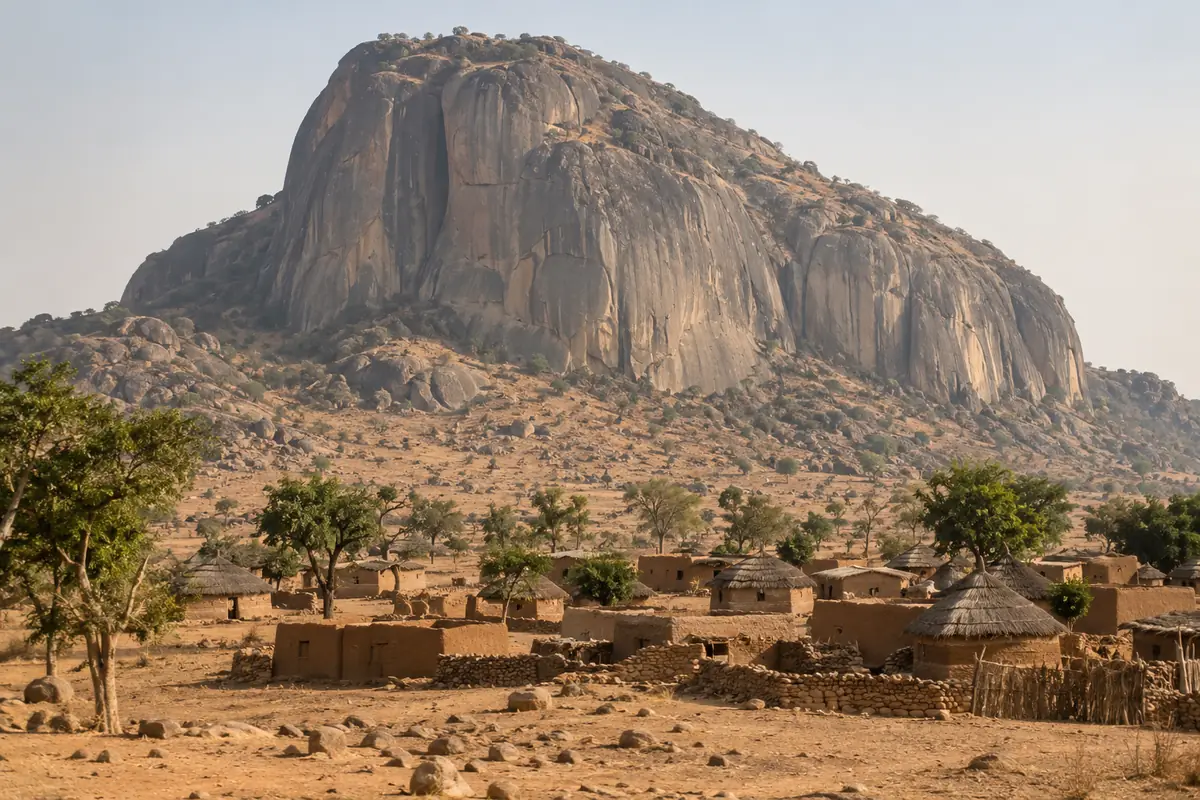
Image: Generated illustration — AI-generated for Naija Tales, reviewed for accuracy, Generated illustration, not a historical photo
Hunters found a giant rock near Gusau already taken by jinn, so they built at its foot instead. The town that grew there still lives beside its strange neighbour.
Drive south-east out of Gusau, the capital of Zamfara State, and a great bare dome of rock rises out of the farmland. Locals compare it to Zuma Rock near Abuja. Leadership Weekend put it at about 350 metres above sea level and roughly a square kilometre across. Its name is Kwatarkwashi, and the town of the same name, in Bungudu Local Government, sits right against its base, between the villages of Gulubba and Tofa.
Why there, and not on top? The town has an answer, and it is a lovely one. According to local legend, powerful spirits, the jinnu, already lived in the rock. Some hunters came to the place, understood that the hill was taken, and settled politely around its foot instead. That settlement, the story goes, became Kwatarkwashi town. Residents told Daily Trust that people have lived around the hill for more than a thousand years. That is their tradition, not a dated finding, but the hill does hold old evidence. People who climb it find pots and other household things, traces of early living, and a natural spring.
There is a twist to the legend. Not everyone stayed at the bottom. A community called Madaci once lived up on the hilltop for many years, and at some point its people moved down to join the town below. So the human story of the rock is one of coming down, slowly, and leaving the heights to whatever else lives there.
And plenty else did. Leopards, hyenas, snakes of many kinds and eagles lived on the hill. A hunter of the old days, Malam Mamman Dan Kiwo, said to be a hundred years old in 2012, listed hyenas, grasscutters, antelopes and rabbits as the commonest animals. The strange thing, every resident agreed, was that the animals did not attack people. A hyena once wandered into a house on a market day and everyone fled, and a big snake once got into the very room where Daily Trust held one interview. Monkeys raided chickens and maize. But nobody remembered being hurt.
Before Islam fully took hold in Kwatarkwashi, the rock was a holy place. There was a shrine on the hill that many people visited. Abdullahi Usman told Daily Trust that as a child he watched worshippers go up to it on Thursdays and Fridays. Leadership Weekend reported that the old settlers used the rock to worship spirits, and that every year they held a ceremony called Daukar Maiki, in which live eagles were caught on the rock and presented to the king.
One man saw the end of it. Alhaji Garba Jodi, then seventy, remembered hunters going up after eagles and carrying them to the emir's palace when he was a boy. Then, he said, on one trip an eagle overpowered a hunter, lifted him up and threw him down the hill, and the man died on the spot. After that, the eagle hunting stopped. It is a single memory, told decades later, and we have no way to test it. But it is how the town remembers the end of the custom.
The caves mattered as much as the birds. Mamman Dan Kiwo said the biggest cave could hold more than a thousand people, and in the old days, when wars became too serious, the people ran into the caves for safety. Seasonal rituals were carried out there too, and he said that is why the emir's palace stands at the foot of the rock. All of that, he added, stopped with the coming of Islam. The whole town is Muslim now. Another hunter told Daily Trust that he still met dangerous snakes in the caves where the old worshippers used to go. Abdullahi Usman added a sadder detail: people once dug up the old idols and sold them to foreigners, until the government stopped it.
Even without the shrine, people in Kwatarkwashi do not talk about the hill as if it were empty. Garba Jodi said residents often heard drumming and the sounds of ordinary home life coming from the rock, especially in the small hours of the morning. They took it as the spirits going about their business. Abdullahi Usman said flames were sometimes seen on the hilltop and then died away, and that people living close by did not panic, because that is simply how the place is.
Then there is Bakandama. Saminu Garba Jodi, who climbed the hill as a child, said there was a spot by that name on top where nobody went without receiving a mysterious slap. You would feel the blow on your face and see no one. So people avoided it. You can believe it or not. The town clearly prefers to keep its distance, which is exactly what the founding hunters are said to have done.
The rock is generous in other ways. A spring runs from it on the far side, by a village called Kura. Its water, Ruwan Kura, is said never to dry up, and a young woman named Hadiza told Leadership Weekend she loved drinking it because it was always cold. Another Hadiza, living at the foot of the hill, said she has never felt threatened by it, not even in the rains, because a crater on top holds the water back from rushing down onto the houses. Herb gatherers still make the hard climb for medicinal plants.
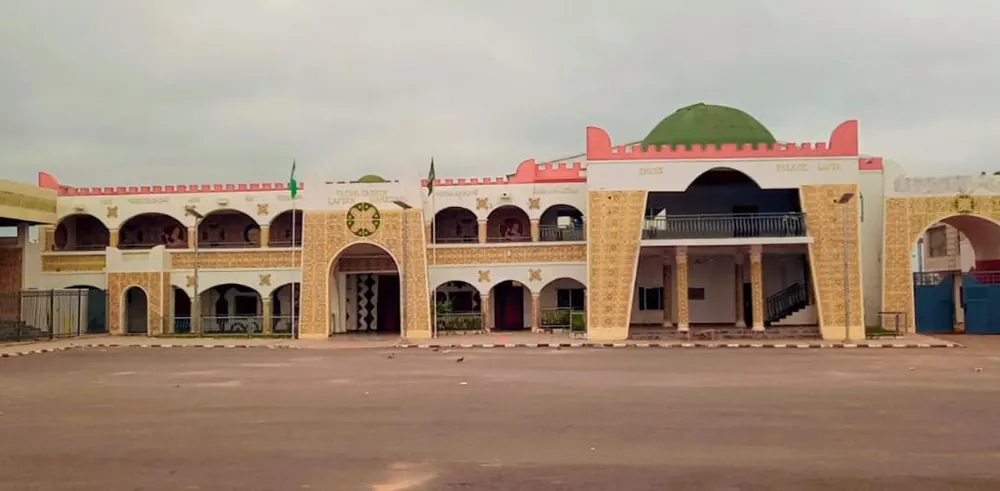
What the rock lacks is attention. The emir, Alhaji Ahmad Umar, then 85 and on the throne for over fifty years, said governments since the days of old Sokoto State had promised to develop it for tourism and never did. Geography students and youth corps members still come up to look and take photos, and quarrying now eats at one side of the rock. The spirits, if they are there, are sharing their hill with more visitors than ever.