Legend · 1498 to today · Mixed
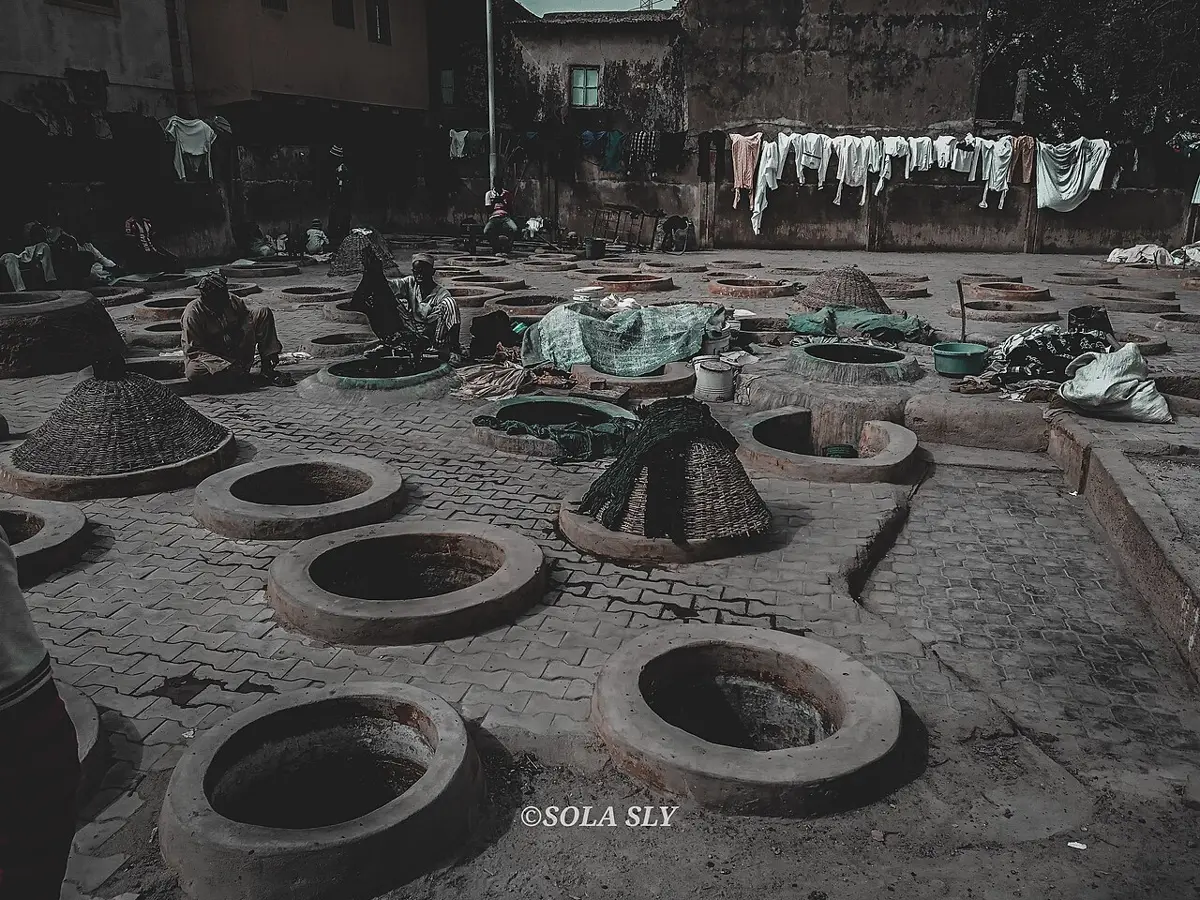
Image: Kofar Mata Dye Pit, Kano.jpg — Solasly, CC BY-SA 4.0 · source
A farmer from Rimaye started dyeing cloth in Kano in 1498, his family says. More than five centuries later his descendants are still at the pits, but only ten of 144 still work.
In the old city of Kano, near the gate called Kofar Mata, there are pits dug into the ground and filled with dark dye. Tourists are often taken there on their first visit to Kano, and officials bring guests to watch men lower cloth into the pits and pull it out deep blue. Most visitors see a craft. What they may not hear is that, according to the people who work there, it is one family's business, and it has been for more than five hundred years.
The family tells it like this. In 1498 a man called Muhammadu Dabosa came to settle in Kano from Rimaye, a place in what is now Katsina State. He was a farmer. Dyeing cloth was something he did alongside farming, a family craft rather than an industry. He started the pits at Kofar Mata, and his descendants never let go of them.
In 2020 the family's seventh-generation descendant, Malam Haruna Baffa, spoke to Daily Trust. He is the secretary of the Kofar Mata dyers. He explained how leadership of the family and of the pits passed down. After Dabosa died, a man called Megidan took over. After him came others whose names the family still recites: Buban, Yahaya, Audu, Malam Baba. Each led the household and the craft together, because for them the two were never separate.
The date and the founder come from family memory, so we should treat 1498 as tradition rather than a recorded fact. But a family that can name its leaders back through seven generations is keeping a kind of archive of its own, written in dye and in names rather than on paper.
As the family grew, the craft travelled. Baffa said family members went out across the land looking for good cotton, and they took their finished, dyed cloth with them wherever they went. So the business spread with the family, carried along trade routes by people searching for raw material and selling finished work at the same time.
One detail he shared is easy to miss but important. The work is divided. Men do the dyeing at the pits. Women in the family create the designs on the fabric after the men have dyed it. He described the women's role as vital, and said the younger women are now taking over from the older ones, just as the sons take over the pits. So when you look at a Kofar Mata cloth, you are looking at the hands of both.
He was proud of the quality. He told the paper that the family's ancestors said Kofar Mata cloth was always in high demand, especially in festive seasons, and that it was counted the best fabric sold in the area. In his words, they often ran out of stock because buyers came from Mali, Togo, Niger, Senegal and even parts of Asia and Europe. "We were not only rich but also proud of the craft as well," he said.
Part of what still draws visitors is that the method has not changed. Baffa said tourists come from around the world to see how the family still works the same way it inherited from its forefathers. That is the real attraction. Not a museum display, but a working site where the old way is still the daily way.
But the picture today is not a happy one. When Daily Trust visited in 2020, it found only a few dyers at work and many pits left unattended. The centre, the reporter wrote, was living in the shadow of its former self.
The numbers Baffa gave were stark. Of the 144 pits at the centre, only 10 were still working. Many people who inherited the trade from their parents had left it to find other ways to earn a living.
He pointed to two causes. One was neglect: the operators said successive governments had given them little support, even though the site had been renovated several times. The other was competition from cheap imported fabric. He said cloth from China, often made from synthetic material rather than cotton, had flooded the markets, and locally dyed fabric could not compete on price. Across Kano city, he said, other dyeing centres had closed, and thousands of young people who once worked in dyeing had lost their jobs.
He also said the centre had been shown at international exhibitions and had found foreign partners, but did not have the capital to make the most of those deals. He still believed the world wanted what they made. "We are here because this is what we inherited from our forefathers and it is our pride as dyers," he said.
That is what makes Kofar Mata more than a tourist stop. It is a family that has kept a promise to its ancestors for over five centuries, and is now working to keep it with ten pits instead of a hundred and forty-four.