Lost history · 1806 and later remembrance
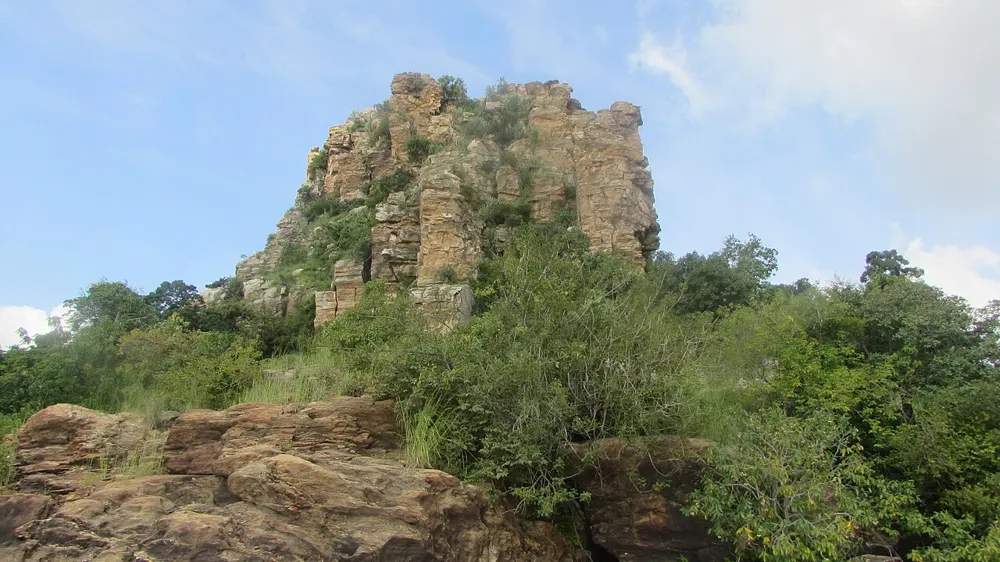
Image: Juju Rock (2).JPG — adeleke adesanya, CC BY-SA 4.0 · source
At Jebba, a monument remembers European explorers, while a nearby river island holds a rock with a different meaning for local people.
At Jebba the Niger is wide and fast, and in the middle of it, on a small island, rises a dark rock. People call it Juju Rock.
Some local people believe it holds spiritual power. Their way of showing it is simple: they leave it alone. They do not climb it, and they do not touch it. To get close you need a canoe from Mazhi, a village near Jebba.
Jebba sits right on the line between two states. The Kwara side, home to Yoruba and Nupe people, is in Moro. The other bank is Mokwa, in Niger State.
About two kilometres from the rock stands a different kind of memorial: a cenotaph, a monument with no bodies under it, to the explorers Mungo Park and Richard Lander.
A story often told at Jebba says Park was shipwrecked on Juju Rock in 1795. It doesn't fit. Park, a Scottish explorer, only reached the Niger for the first time in 1796, far upriver near Segou in today's Mali. He came back in 1805 to follow the river to the sea. That trip ended in 1806, when he died at the Bussa rapids, well upstream of Jebba.
So the rock did not wreck Park. Over time, the monument and the island simply got tangled together in the telling.
Stand at Jebba and you have two ways of remembering the Niger. One is a stone monument, put up for two foreigners whose names went into the history books. The other is a rock nobody built, honoured by keeping your distance, with no plaque at all.
Visitors usually come for the first one. The canoe to Mazhi is worth the trip too.