Lost history · 1949
Image: Generated illustration — AI-generated for Naija Tales, reviewed for accuracy, Generated illustration, not a historical photo
The men who dug Nigeria's coal asked for pay they believed was owed. On 18 November 1949, the police answered with rifles.
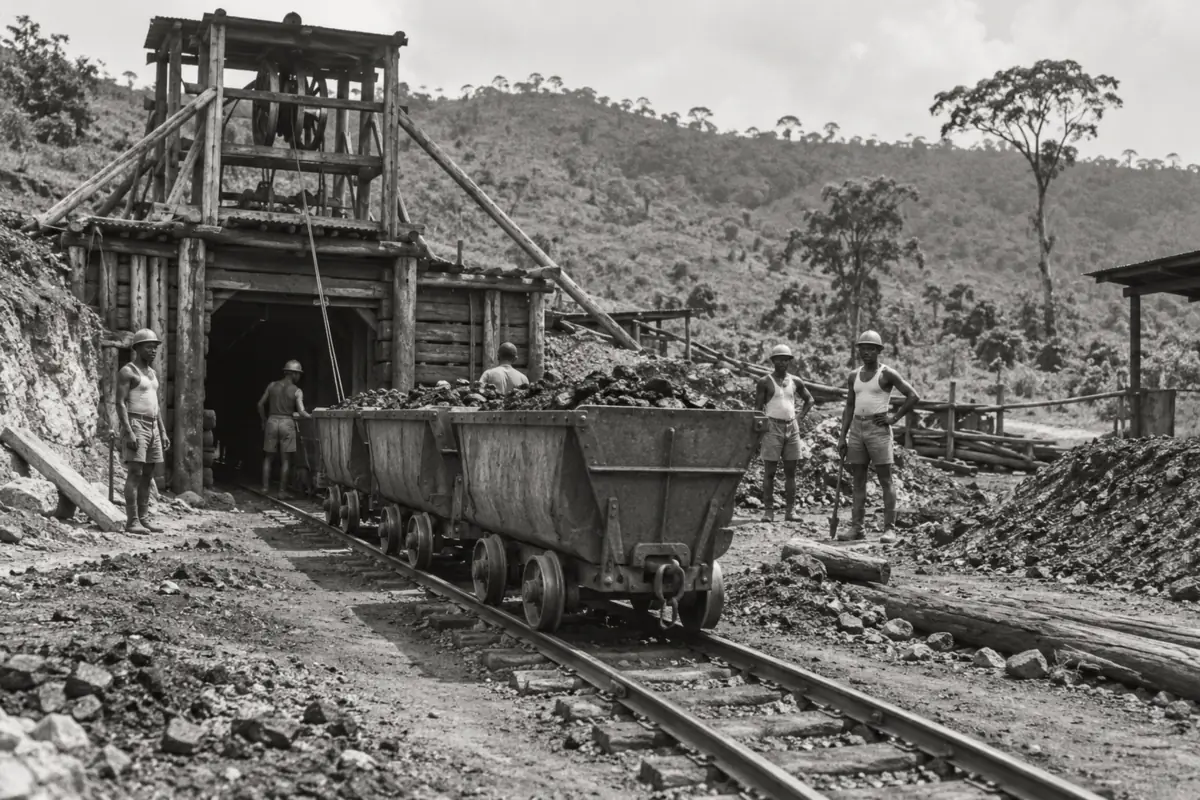
Enugu is one of those cities that exists because of what lay under the ground. Coal was found in the Udi hills in the early twentieth century, and the colonial government opened its own mines to feed the railway and the steamships. Workers came from the surrounding villages, most of them Udi men at first, and the camps where they lived slowly turned into a town. In 1938 Enugu became the administrative capital of the Eastern Region. By 1948 there were about 6,000 men working the mines, and by 1952 the city held some 62,000 people.
Coal mining is hard work anywhere. Under colonial rule in Nigeria it came with extra weight. Historians of the Enugu colliery, Carolyn Brown above all, describe a workplace of regular physical punishment, humiliation, and pay that did not always arrive when it should. Miners spoke of themselves as slaves. That word was a protest, but it tells you how the work felt to the men doing it.
Iva Valley was one of the mines of the government-run Enugu Colliery. By late 1949 the miners there were sure of one thing. They believed the management owed them large sums in arrears, back pay that had been promised and was being held back. The idea had spread through the camps and through the local press, much of which was then on fire with what people called Zikism. This was a young nationalist movement that grew up after the Second World War around admiration for Nnamdi Azikiwe, the man everyone called Zik. Its newspapers were telling Nigerians that the colonial order was neither fair nor permanent, and the miners were listening.
So the miners struck. Accounts of exactly how the day unfolded vary, and historians still argue about what the authorities feared and what they were trying to do at the mine that morning. What is not in doubt is what happened in the end.
On 18 November 1949 a British Superintendent of Police, F. S. Philip, stood at the head of a body of British and Nigerian officers at Iva Valley. In front of them were the strikers, and they were unarmed. Philip gave the order to fire.
Twenty-one miners were killed. Fifty-one more were wounded. Think about that for a moment. These were men who had gone down into the dark every day to dig out the fuel that kept the colony's trains moving, and they died on the surface, in the open air, over a quarrel about wages.
The shooting did not stay a local labour story for long. Nigerians across the country heard about it and understood it in a particular way. It was not seen as an accident of crowd control. It was seen as proof of what the nationalists had been saying: that colonial power, when pushed, would shoot. The British set up an inquiry, and there was rioting in other towns in the weeks that followed. For many people in the east, the dead of Iva Valley became the clearest picture they had of how the empire really treated them.
The anger had somewhere to go. Pro-Zikist labour unions, close to the National Council of Nigeria and the Cameroons, formed a body they called the National Emergency Committee. Its work was to make sure nobody in Nigeria could forget Enugu. It spread the story, held secret meetings, and helped organise demonstrations against colonial rule. The Zikist groups used the killings openly to argue that the British had to go.
That is the part of the story that usually gets told, the shooting as a stepping stone towards independence in 1960. It is true, but it is not the whole of it. The men who died were not symbols when they woke up that morning. They were miners with families, from villages around Udi and beyond, who had specific complaints about specific money. Brown's work on the colliery is valuable because it keeps them in view as workers who had been organising and arguing with management for years, with their own ideas about dignity and fair pay, long before nationalist politicians took up their cause.
Today, people working on the memory of mining in Enugu have gone looking for the places and neighbourhoods around the colliery that the famous story leaves out: the camps, the pits, the streets where mining families lived. The mines themselves have long since closed. The coal city became a civil service city. But every year on 18 November there are people in Enugu who still remember Iva Valley, and the twenty-one men who asked to be paid.