Lost history · Precolonial to 1902 · Disputed
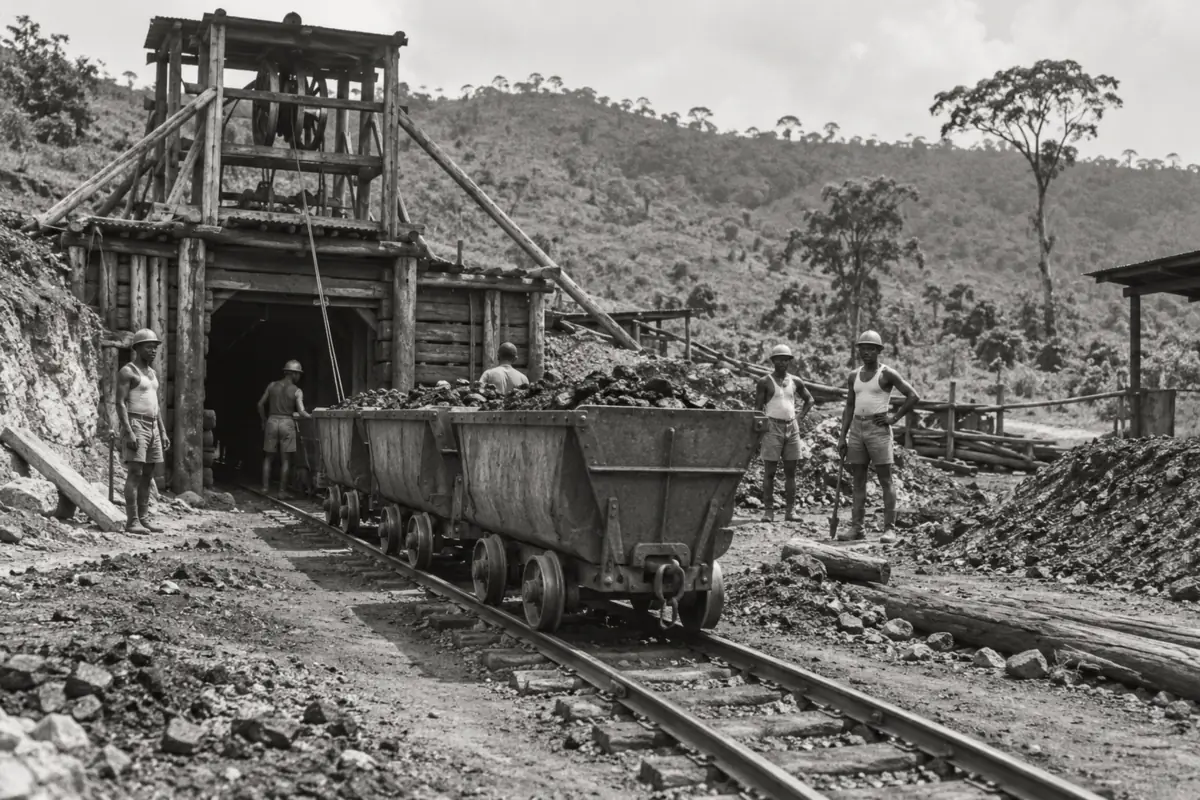
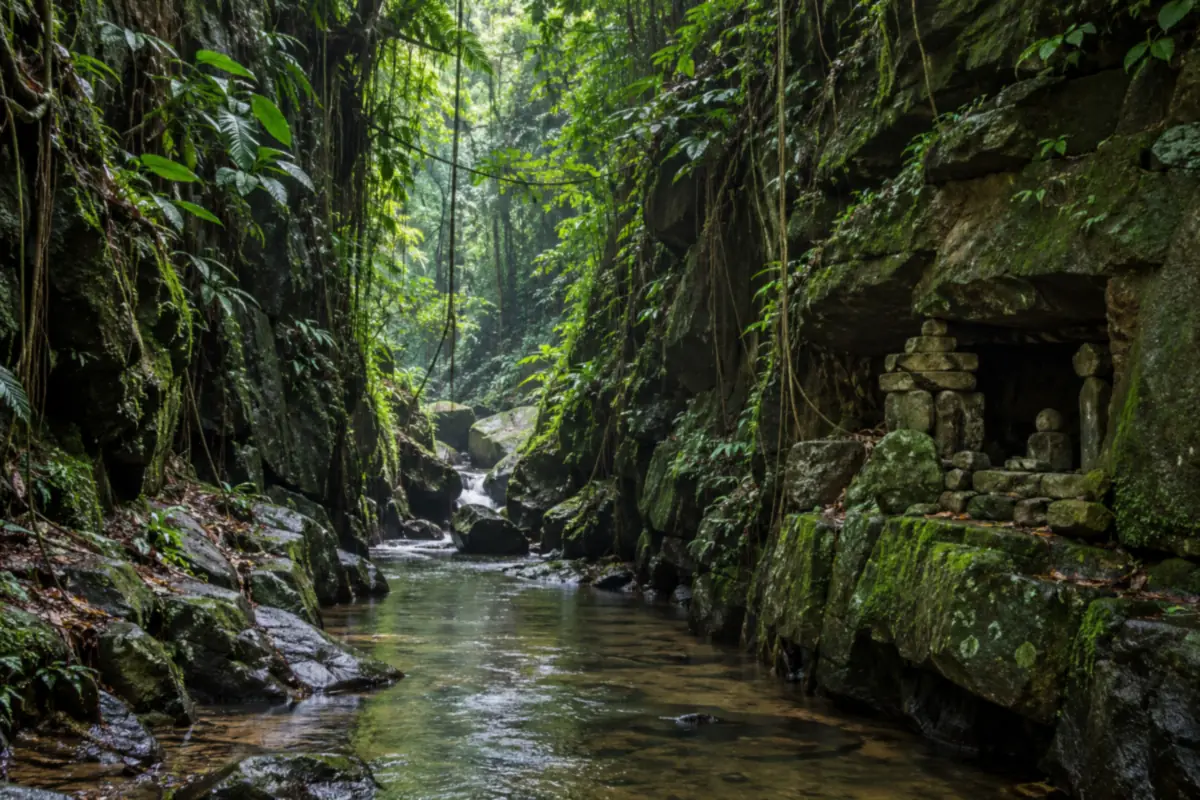
Image: Generated illustration — AI-generated for Naija Tales, reviewed for accuracy, Generated illustration, not a historical photo
People walked for days to put their quarrels before a voice in a gorge. Some of them never walked home.
Picture yourself somewhere in the old Igbo or Ibibio country two hundred years ago. Your brother has died suddenly and your family whispers that a neighbour poisoned him. Or someone has been accused of witchcraft, and the village is splitting in two. The elders cannot settle it. Somebody says what people across the whole region said when a case got too heavy: take it to Arochukwu.
Arochukwu sits in what is now Abia State, and its people, the Aro, built one of the most remarkable networks in West African history. They were traders, and their settlements spread far across the east. But the thing that gave them their reach was not only trade. It was an oracle called Ibini Ukpabi. The name is usually given as the Drum of the Creator God. The British, when they heard of it, called it the Long Juju.
People brought it cases of murder, witchcraft, poisoning and family disputes, the kind of matters where nobody trusted an ordinary judge. Over time it became something like a supreme court for the land east of the Niger. You came with your quarrel, and Aro agents, who were everywhere along the trade routes, would guide you to the town and to the shrine.
The shrine itself was built to frighten. It lies in a gorge with a waterfall, reached through a narrow gully about six feet deep. Heritage accounts describe a sacred altar, and a dark inner place called the throne of judgement, which guides still talk about as the Holy of Holies. You did not see the god. You heard it. And then it decided.
If the oracle found you innocent, you went back out to your relatives. If it found you guilty, the story your village heard was simple. The god had eaten you.
Here is where the story turns. The old belief was that the losing party was destroyed by the oracle. But over the years the priests of Ibini Ukpabi came to prefer something more profitable. Instead of dying, many of the condemned were sold into slavery. Some writers go further and say the priests began to bend verdicts on purpose to find more people to sell. That is an accusation, and it is worth being careful with it, because no record survives of individual trials. What we do know is that hundreds of people went to the oracle and a great many never came back, and their families believed the god had taken them.
Today, if you visit the site, local guides walk you along what is now called the Long Juju Slave Route, and the places on it carry names that are hard to forget. There is a hill of rags. Tradition says the condemned were told to undress there and leave their clothes behind before they went into the tunnels. There is the tunnel of disappearance. And there is a stream people call the red river.
The story told about that stream is the most chilling part of the whole thing. As a condemned person vanished, it is said, the Aro coloured the water red, so that it flowed down to waiting relatives looking like blood. The family saw it and went home to mourn. Their son or daughter was in fact alive, being led blindfolded out through another opening, the Iyi-Eke, down to a riverside spot later remembered as Onu Asu Bekee, the European beach. From there boats carried them towards Calabar and the Atlantic trade. I should be honest that this red-water trick comes to us through heritage tradition, not through witnesses we can name. But the route is real, the site is real, and the trade it fed was very real.
By the 1890s the British were pushing inland from the coast, and the Aro were in their way. The Aro opposed the British for reasons of trade, power and faith. Missionaries threatened the oracle's hold, and colonial rule threatened the Aro network itself. Aro-led forces raided communities that sided with the newcomers. In November 1901 an Aro force led by Okoro Toti sacked Obegu, a British ally, and about 400 people died.
The British had already been planning to strike. Sir Ralph Moor, the High Commissioner, set out his goals in writing: end the slave dealing, break what he called the Juju hierarchy, push in British trade and British money. On 28 November 1901 Lieutenant Colonel Arthur Montanaro marched out with 87 officers, 1,550 soldiers and 2,100 carriers, advancing on Arochukwu from four directions at once, from Oguta, Akwete, Unwana and Itu.
The Aro fought hard, though they had nothing like British weapons. Arochukwu fell on 28 December after four days of fierce fighting, and the shrine was reportedly blown up. Fighting went on until the spring of 1902, when the last big battle was lost at Bende. Okoro Toti and other leaders were tried and hanged. The king, Eze Kanu Okoro, went into hiding and was later caught.
So the British destroyed the shrine. But they could not quite end it. The gorge, the tunnels and the stream are still there, and today they are one of Abia State's best-known heritage sites. People go to see a place that was both a court and a trap, a sacred judge and a market in human beings. It is an uncomfortable story, and that is exactly why it deserves to be told plainly.