Custom · Traditional to present · Tradition
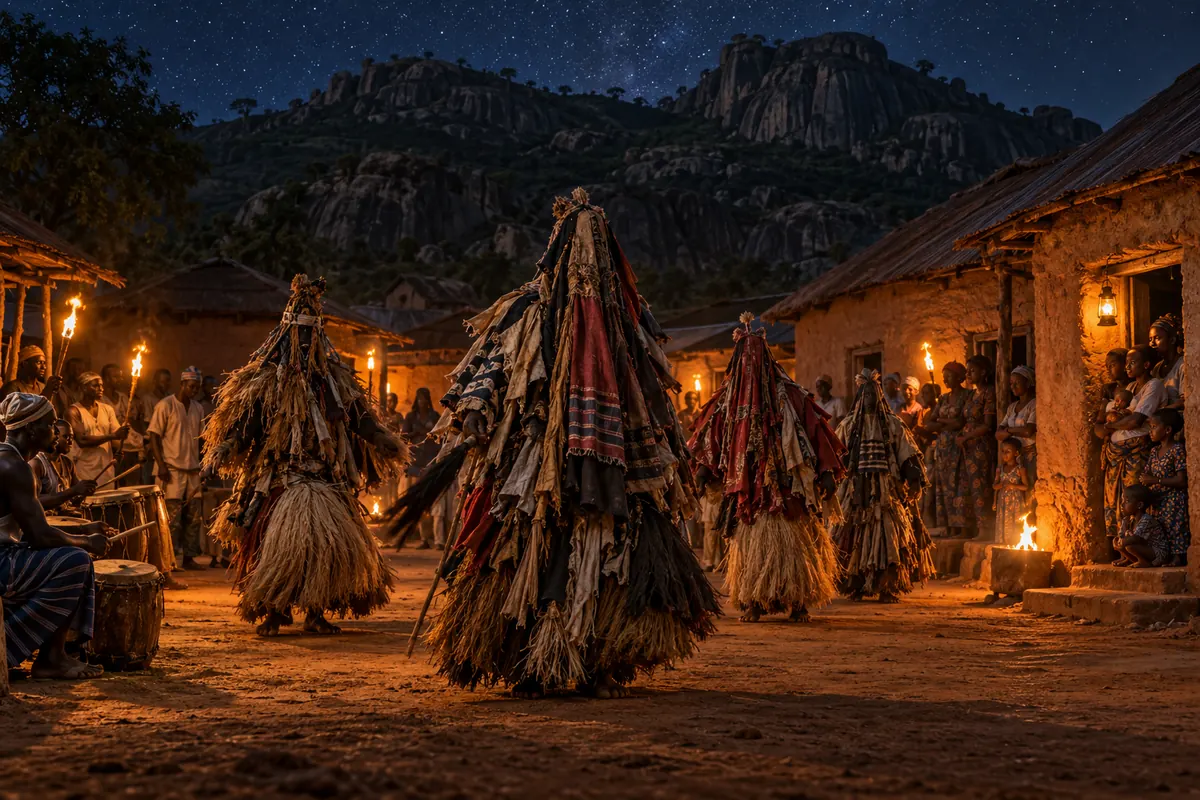
No matching image yet, so this page uses a plain title card instead of a photo.
An Ifa priest who got too comfortable in the palace, a beating, and a dying curse about rain. Ejigbo's king explains why his town once spent a whole day fighting itself with sticks, and why he thinks it kept the peace.
Ejigbo is an old town in Osun State. Its king carries the title Ogiyan, and in 2017 the man on that throne, Oba Omowonuola Oyesosin, sat down with the Punch newspaper to talk about his town. He had been king for 43 years, and he spoke like a man who had seen a lot and was in no hurry.
He started with where Ejigbo came from. It is, he said, one of the very old towns of Yorubaland, founded at nearly the same time as Oyo. The people of Ejigbo, he said, had followed Oranmiyan from Ife when he went off to found Oyo. Once Oyo was set up, the rest of the followers spread out to start their own towns. Ejigbo's founder was Akinjole, from Iwinrin in Ile-Ife. Akinjole also founded Edunabon, the king added, while his brother founded Ikire Ile.
Then the interviewer asked about the thing Ejigbo is best known for, the Ogiyan festival. The king told the story behind it without any fuss.
In the days of the first king, he said, an Ifa priest named Sawoleje came to Ejigbo to carry out divination for the palace. He became very close to the town. He lived in the palace itself and was well fed. And here the king quoted a Yoruba saying: "baye ba nyeni, iwa ibaje laawu", which he explained as meaning that bad behaviour creeps in when a person becomes too comfortable.
That is exactly what happened. Sawoleje seduced one of the king's wives. As punishment he was beaten almost to death. But before he died, he laid a curse on the town. Unless the people beat themselves every year, he said, there would be no rain.
So, the king explained, they have done it every year since. The festival falls during the rainy season, around September, and it was still being held when he spoke, though he admitted that, in his words, civilisation was taking a lot of these things away.
The festival opens on a Friday with aisun Ifa, a vigil for Ifa that lasts the night. The Ifa priests sing. The king's dance troupe has its own part to play, and the women have their own way of praising Ifa through the night.
The second day is the famous one. It is called ewo, and it is a fight. The town divides itself into two sides, and from morning until about six in the evening, the two halves go at each other. No cutlasses are allowed, the king said, but canes, sticks and stones could be used freely.
There was one rule that would make any married person laugh. On that day, he said, you are allowed to flog your in-laws. If you see your in-law, you hit them, and it is not an offence. Nobody can take you to task for it afterwards.
The king did not see this as wild or dangerous. He saw it as a kind of safety valve. That, he said, is why Ejigbo is a fairly peaceful town: the people fight with sticks and stones just once a year, and that is that. Whatever anger had built up through the year had its day, and then it was done.
Even so, he was honest that the fighting part had faded. By 2017, he said, people did not do much of it any more, because of modern life and because other religions had come in. The curse about the rain, of course, is part of the story, not something anyone has proved.
He also spoke frankly about other old rules that had fallen away. There used to be taboos in Ejigbo, he said. One was that people could not sweep with a broom, a rule he had heard was started by one particular king. Another was that twins could not enter the town's place of worship. That one, he said, was made by a king who was himself a twin. Now twins are free to go in. Taboos like these, he said, were man-made and grew out of circumstances.
Oba Oyesosin was not a man who forgot the old ways, but he was not stuck in them either. At the time, another monarch had said traditional rulers should throw the deities out of their palaces. The Ogiyan said that king had a right to his opinion, but he would keep his. He had been installed with the duty of looking after the deities, he said, and to get to the throne and then abolish them would be insincere. He even explained his several wives in those terms: one could tend Ifa, another could look after Osun, because one wife alone could not care for a palace like his.
His own road to the throne had an Ifa reading in it too. When his predecessor died in 1971, he was at the University of Ibadan, seven months from his final exams. The town invited a priest from Iwo, who said the next king was not living in town, was not a tall man, and would reign a very long time. "I'm a short man," the king said, and he felt the words had come true.
Ejigbo's people travel far. Many went to Ivory Coast as traders, barbers, tailors and laundrymen, and the king had written his university thesis on how that migration affected his town, which for a long time ran on money sent home. Those who settled at Ejigbo in Lagos, he said, came from here, and some still come home at festival time.
When the reporter arrived, the king was getting ready to go to his farm. He had tried trading, he said, but his people told him a king should not compete with his subjects, so he took up yams, then maize, then poultry, selling eggs every day. Forty-three years a king, keeper of the town's gods and its yearly fight, and he still went to the farm himself.