People · 1820s–1874
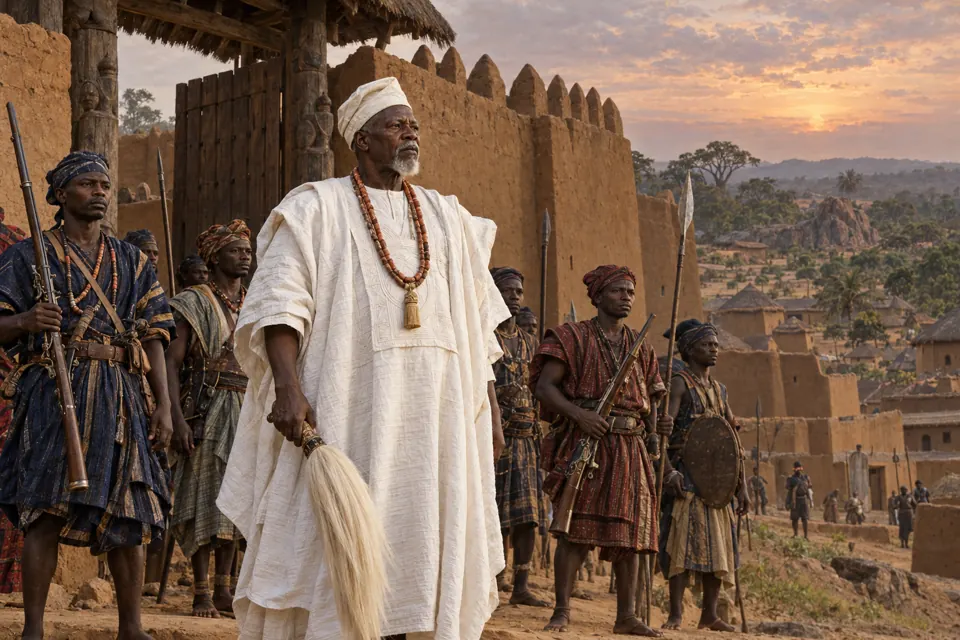
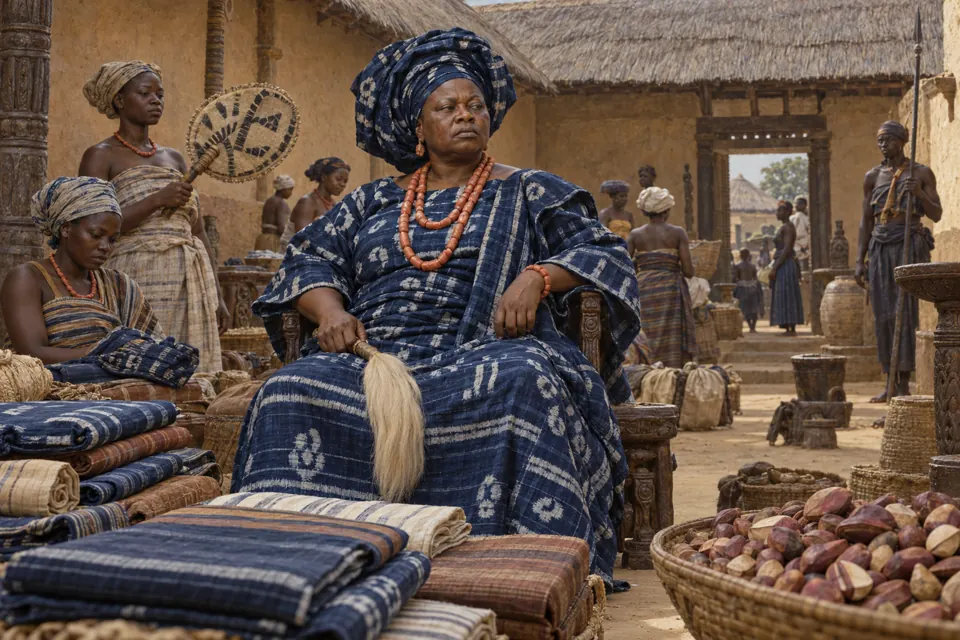
Image: Generated illustration — AI-generated with Codex image tool for Naija Tales, Generated — not a historical image
She owned thousands of workers, lent guns to generals and feared no man. Then the town turned against her.
Efunsetan Aniwura was born in the 1820s in Ikija, an Egba town. She moved to Ibadan, which was then a young and rough war town, and there she became a trader. She traded in tobacco, cloth, salt and, most importantly, guns and gunpowder. Ibadan was always at war, so its generals needed weapons. Efunsetan supplied them, often on credit, which made many powerful men owe her money.
Around 1870 she was made Iyalode, the highest title for a woman in Ibadan. The Iyalode spoke for the women of the town and sat with the chiefs. She was only the second woman to hold the title there. She had farms worked by a huge number of slaves; some accounts say two thousand. She also gave money to the Anglican church, though she was not a Christian herself.
Efunsetan had one child, a daughter, who died in childbirth. People say the loss made her hard and bitter. She is said to have made strict rules that no one in her household could have children, and to have punished cruelly those who broke them. The playwright Akinwumi Isola wrote that she put forty-one of her slaves to death. Whether that number is true, nobody can now prove. It comes from oral memory and from a play, and it may have grown in the telling.
Her wealth and her sharp tongue made enemies, including the ruler of Ibadan, Aare Latoosa. She refused to back some of his wars. On 1 May 1874 he removed her from her title. Not long after, on 30 June 1874, she was dead. The most common account says her own slaves killed her, sent by her adopted son Kumuyilo, who had been paid off. Another account says she took poison rather than be humbled. Either way, many believe Latoosa was behind it.
Today a statue of Efunsetan stands at the Challenge roundabout in Ibadan. Isola's play and Tunde Kelani's film keep her story alive. Was she a cruel tyrant, or a strong woman crushed by jealous men? Probably a bit of both. That is what makes her story worth telling: real people are rarely all good or all bad.
The title Efunsetan held still exists. The Iyalode of Ibadan remains one of the most important women in the city, and many Yoruba towns have their own Iyalode who speaks for women and market traders. Efunsetan's story reminds us that, long before modern politics, Yoruba women could hold real power, own great wealth and stand up to kings and generals. It also shows the danger that power brought. In 2020 a new film about her, starring Clarion Chukwurah, brought her name back into cinemas across Nigeria.