Lost history · 1907-1911; 2019
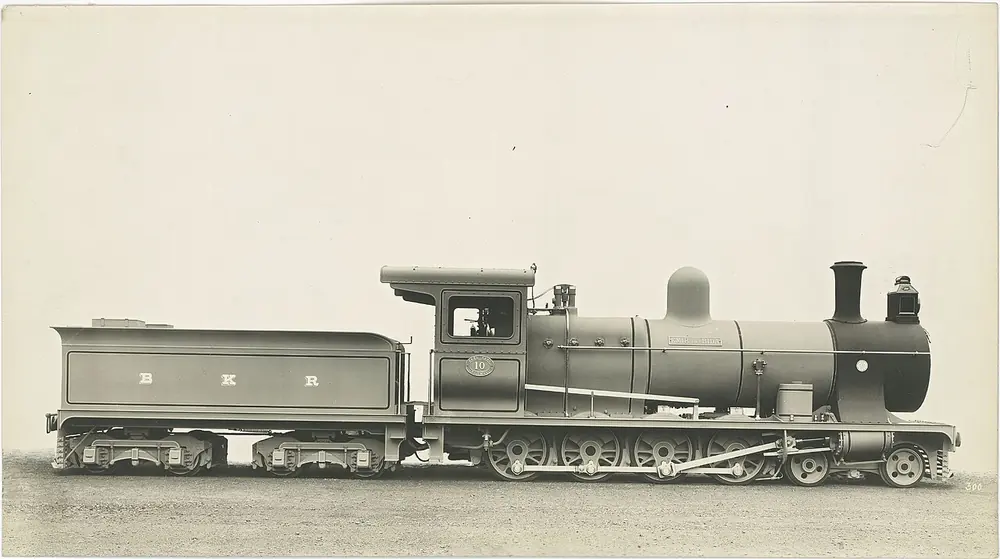
Image: Baro-Kano Railway Lokomotive Emir of Bida.jpg — Unknown author, CC0 · source
Every rail and engine for the line to Kano came up the Niger to a marshy bank at Baro. A century later the town got a shiny new port, and nothing came.
On 8 August 1907 a cable arrived at Zungeru, then the capital of Northern Nigeria. Parliament in London had approved a railway from Baro to Kano. The odd thing was the starting point. Baro was a small fishing place on the Niger, in what is now Agaie, Niger State, but it sat near the limit of navigation for big boats on the river, and that was the whole point. Every rail, sleeper and engine had to come from overseas, and the only road in was the river. River traders laughed at the plan to push 30,000 tons up the Niger in one season. The official report for 1910 to 1911 records that the first 1,700 tons were landed at Baro that September and October anyway. Over the next three years more than 83,000 tons followed. The river did not make it easy. On 22 July 1908 the ocean steamer Bassa, 1,600 tons, was wrecked near Lokoja. The report calls it the only serious accident. At Baro itself, a marsh ran along most of the river front. By every rule of tropical health, the report admitted, Baro ought to have been a notoriously unhealthy spot. So they drained and cleared it, built mosquito-proof shelters and put up the workshops first, so that engines and wagons could be put together on the bank and sent north behind the diggers. Royal Engineers laid the track. Surveyors and foremen came from South Africa, and timbermen came from Canada to run a sawmill in the forest near mile 18, which cut every wooden sleeper the line needed. The man behind it was the High Commissioner, Sir Percy Girouard, a Canadian railway builder.
The line climbed north from about 300 feet above sea level at Baro to 2,400 feet at the watershed. The report says the hardest part was the empty country of the middle stretch, where food and labourers were scarce, until the builders crossed the Kaduna river at mile 215 and reached Hausa country, where food was plentiful. The bridges came out far bigger and costlier than planned, because northern storms send sudden floods down the valleys, and the report blames them for the line running over budget. On 28 March 1911 the railway reached Kano, 366 miles from the river. That same year the Lagos line pushed up to Minna and met it, and in 1912 the two were joined into one railway. Baro became the place where boat met train. A weekly steamer already ran between Baro and Burutu, near the sea. For decades, groundnuts, cotton and hides came down from the north, went onto barges and floated away. Cloth, kerosene and cement came up the river and went onto wagons. The village head, the Etsu Baro, Mohammed Ndanusa, told Daily Trust that dockworkers and traders once spread all the way to Katcha, about 19 kilometres off. Baba Isiyaku, a trader in the Hausa quarter, said his grandparents worked for British firms going back to the Royal Niger Company, and the next generation worked for John Holt and UAC. They settled by the river and married local people. The Emir of Agaie, Yusuf Nuhu, remembered lining up as a schoolboy around 1958 to welcome Sir Ahmadu Bello. Then things went quiet. The Etsu Baro said it began with the civil war, when river traffic stopped in 1968 after a boat full of traders never came back. After that it never really started again.
On 19 January 2019, a few weeks before the election, President Muhammadu Buhari came in by helicopter to open a brand-new port at Baro, with a harbour crane, a transit shed and offices. Families thronged out to watch. One commercial driver said he ferried people in from far and near that morning. Even the price is argued over. DredgeWire put it at six billion naira, the Agaie council chairman at about ten, and in 2025 the waterways agency told lawmakers the contract was 3.56 billion, nearly all of it paid. Whatever it cost, the trouble was everything around it. When THISDAY visited in 2020, the drive from Minna took four hours over broken roads and bridges made of wood and old containers. The council chairman said only 10 of the 52 kilometres of new road had been built in six years. The old rail link to Minna was dead. Silt had come back into the river. A Daily Trust reporter who walked the site in 2021 found the gate chained and its rails buried in sand, an idle generator, and cobwebs and bird nests in the generator house. A resident, Jummai Mai-tuwo, said even getting a sick person to hospital was a struggle, and many lives had been lost that way. Old Baro worked because it joined things: river to rail, north to sea. The new port was a building with nothing to join. In August 2025 ministers told the House of Representatives, yet again, that dredging, roads and a rail line were coming. Baba Isiyaku, 53, said his parents talked often about how the port brought wealth to the town. He wants to see it happen once more.