People · 1500s
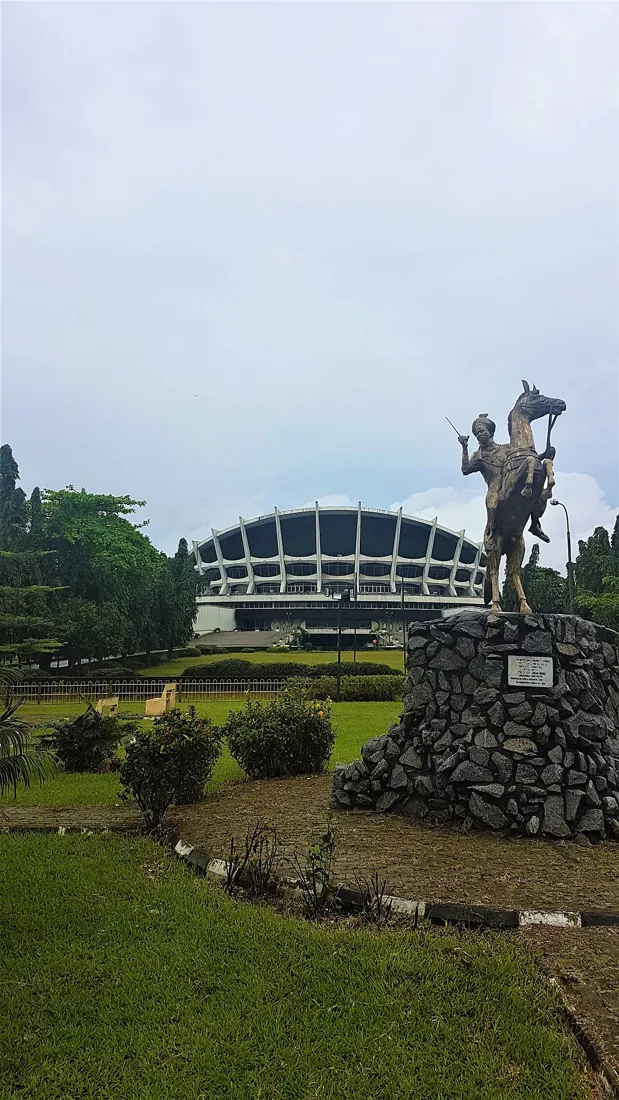
Image: Queen Amina Statue.jpg — Sidhant Bendre, CC BY-SA 4.0 · source
A warrior queen of Zazzau whose walls, the story says, still mark the land of northern Nigeria.
In the sixteenth century, the Hausa city-state of Zazzau, around modern Zaria, was a trading power on the routes that ran across the Sahara. Tradition says Amina was a daughter of its ruler, Bakwa Turunku, and that as a girl she chose the company of soldiers over the palace.
When she came to power, the story goes, she led her cavalry herself. Her campaigns pushed Zazzau's reach far to the south and opened trade in kola, cloth and metalwork. Neighbouring towns paid tribute to her.
Amina is most remembered for building walled camps wherever her army stopped. Earthen town walls across northern Nigeria are still called ganuwar Amina, Amina's walls. Whether she built every one of them is doubtful, but the name shows how big she grew in memory.
To understand Amina, imagine the city she ruled. Zazzau sat where caravans met: salt and horses came from the north, kola nuts and cloth from the south, and the city grew rich by taxing and protecting that trade. A ruler who could keep the roads safe could make a whole people prosperous.
That is why the walls matter. An earthen wall, often with a deep ditch outside it, turned a trading town into a fortress. Tradition credits Amina with making walled camps standard for her armies. Many of those old wall lines can still be traced around northern towns, even where the earth has slumped back into the land.
The tradition also says Amina never married. Later storytellers added colourful tales of lovers and short-lived husbands, and you will find them repeated online, but they come from much later writing, not from her own time.
Almost everything about Amina comes from chronicles written down long after her death and from oral tradition. Some historians even debate exactly when she lived. Today her statue on horseback stands at the National Theatre in Lagos, and she remains a symbol of Nigerian women's strength.