Lost history · 1918
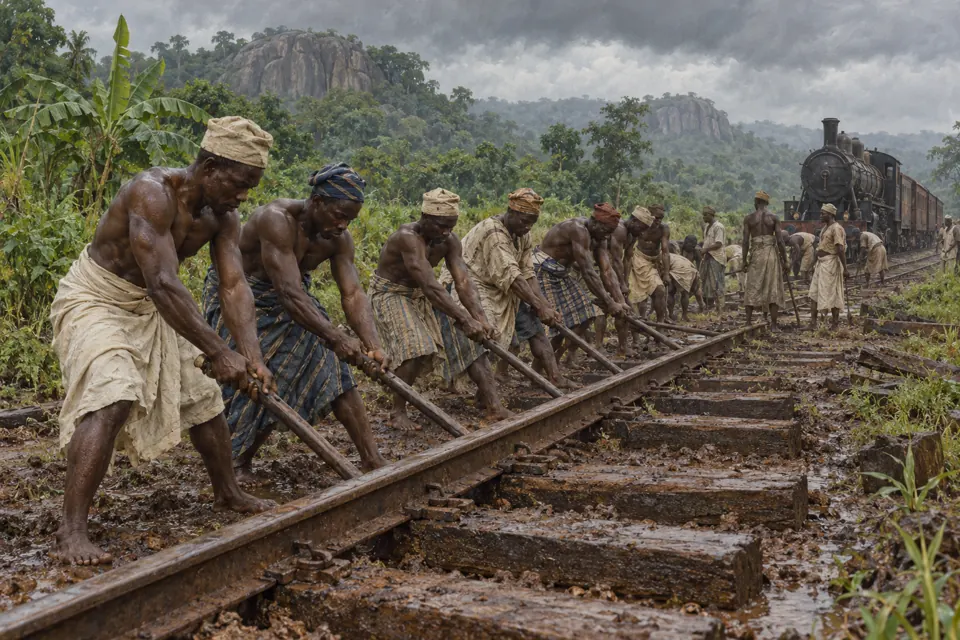
Image: Generated illustration — AI-generated with Codex image tool for Naija Tales, Generated — not a historical image
In 1918 thousands of Egba farmers rose against a new tax. They pulled up rail lines and derailed a train.
For many years after the British arrived, the Egba people around Abeokuta kept a kind of independence. They had their own government, the Egba United Government, and their own rules. But in 1914 that changed. After the shooting of people at Ijemo that year, the British took over Egbaland fully. Then they started to bring in new ways of ruling, and new taxes.
In 1917 the colonial officials planned to split Egbaland into six districts and to make every adult man pay tax directly. The British Resident, W. C. Syer, also wanted the Egba to pay a bigger yearly sum. It was doubled to ten thousand pounds, then bargained down to six thousand. To farmers, who already felt squeezed, this was the last straw. They also hated forced labour, being made to work on roads for nothing.
The rising got its name from Adubi, the head man of a village called Elere. He wrote a letter of complaint in which he said, in words that still hit hard, that his people had been treated like slaves in the bush. His name became the name of the whole war.
On 7 June 1918 the British arrested about seventy chiefs. Instead of calming things, it lit the fire. On 11 June soldiers arrived, men just back from fighting for Britain in East Africa during the First World War. On 13 June the farmers struck. Near Agbesi they tore up the railway line, and a train was thrown off the tracks. The station at Wasinmi was destroyed. A British trader named Ashworth was killed, and so was the Osile of Oke-Ona, Karunwi II, a chief seen as working with the British.
At its height, perhaps thirty thousand people took part. The army hit back hard. By 10 July the rising was crushed, and around six hundred people had died.
The British won the fight, but they quietly stepped back on the tax. Direct taxation in Egbaland was put off until 1925. The Adubi War is not in many school books, yet it is one of the biggest risings in colonial Nigeria, ten years before the famous Aba Women's War in the east. If you ride the old railway near Ewekoro today, you are passing the spot where farmers once pulled up the iron with their hands.
Why has the Adubi War been so quiet in our memory? Partly because the British wrote most of the records, and they called it a disturbance, not a war. Partly because the farmers who fought did not leave diaries. And partly because it happened during the First World War, when the newspapers of the world were looking elsewhere. Historians such as Samuel Fury Childs Daly have since shown that, after 1918, the police in Abeokuta changed from chasing thieves to watching people who spoke against the government. So the farmers' rising shaped how the town was ruled for years after. Sometimes the stories that changed the most are the ones told the least.