Custom · Documented since the nineteenth century
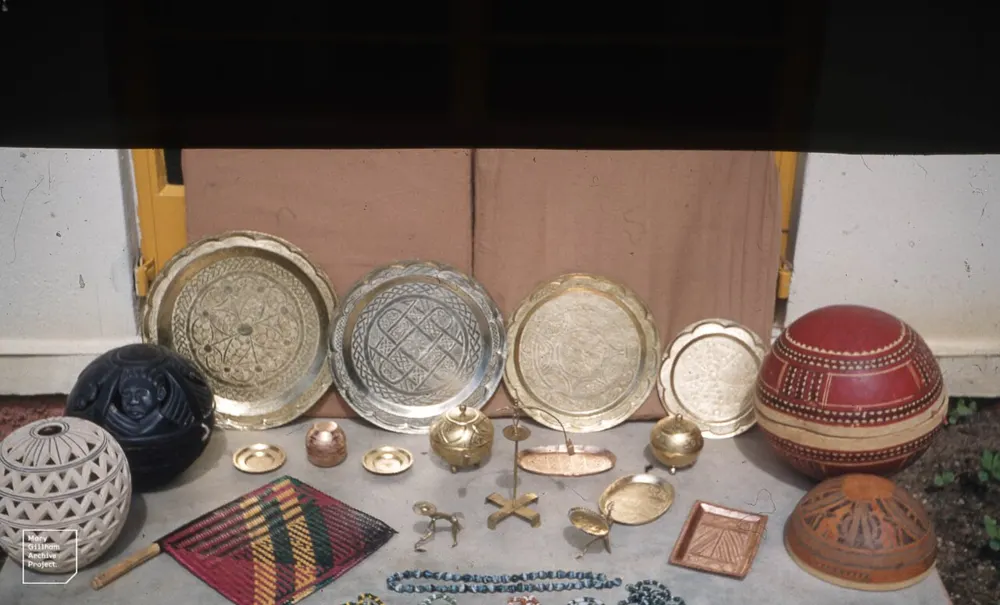
Image: Bida metal work carved calabashes, glass beads from old bottles. Nigeria 1960.jpg — Dr Mary Gillham Archive Project, CC BY 2.0 · source
In a Bida neighbourhood, glassworkers turn old bottles into jewellery, while an elder's knowledge helped recover a much older craft.
In the Masaga quarter of Bida, men sit around a small furnace fed with twigs. One pumps the bellows. Another holds a lump of glowing glass on an iron rod and turns it, slowly, into a bead. Next to him someone is making a bangle with no seam, a perfect ring of glass.
The Masaga are Nupe glassworkers, and their guild only takes members from within the community. Travellers wrote about them in the 1800s, and they are still at it.
Their raw material is old bottles. When European bottles reached Nupeland in the late 19th century, the glassmakers saw a gift. Melt a bottle and you have glass, ready-made, in green, brown or clear. It saved days of work.
Before the bottles, the Masaga made their own glass. They called it bikini. It was dark and shiny, and making it was hard work: preparing raw materials and keeping a furnace burning for days before anyone could shape a single bead.
As ingredients got expensive and hard to find, bottles took over. For more than fifty years nobody made bikini at all. By 2019, researchers looking for someone who still knew how found only one man, Alhaji Abdulazeez Yanko, who had worked in the old workshops.
In November 2019, with Yanko guiding them, the glassmakers did it again. They built a clay furnace over a pit, mixed local sand with a mineral that helps it melt and bits of glass from earlier firings, and kept the fire going for five days. Then they let it cool and broke the furnace open. Inside was bikini.
The Masaga have their own story of how it all began. Eighteen glassmakers, they say, came from Egypt and settled in Bida in the days of Tsoede, the founder of the Nupe kingdom, bringing their skills with them. No one has been able to prove it, and archaeology can't yet say when glassmaking started in Nupeland.
During the 2019 study about seven workshop buildings were still standing, but only two were working. The bottles keep coming. Thanks to one old man, so does the memory of how to make glass from sand.