Custom · 19th century · Legend
Image: The Iron Poles of Salvation – A Symbol of Nigeria’s Early Liberation.jpg — ABORISADEADETONA, CC BY-SA 4.0 · source
In Lokoja, an iron monument carries a tradition about the moment an enslaved person could finally claim freedom.
In Lokoja there is a piece of iron with a promise attached.
The story goes like this. In the days of the slave trade, if an enslaved person could escape, run to this spot and put their hand on the iron, they were free. The missionaries would see to it. Nobody could drag them back.
It is a simple idea: a single touch against a whole life of being owned. That is why people still tell it. Whether it ever worked quite that way, nobody can now say. There is no list of names and no written rule. What is real is the iron, and the town's long memory of freeing slaves.
Lokoja sits on the Niger near its meeting with the Benue, and in the 1700s and 1800s everything on the river passed through it, including human beings. For captives, Lokoja could be one more stop on the way to somewhere further from home.
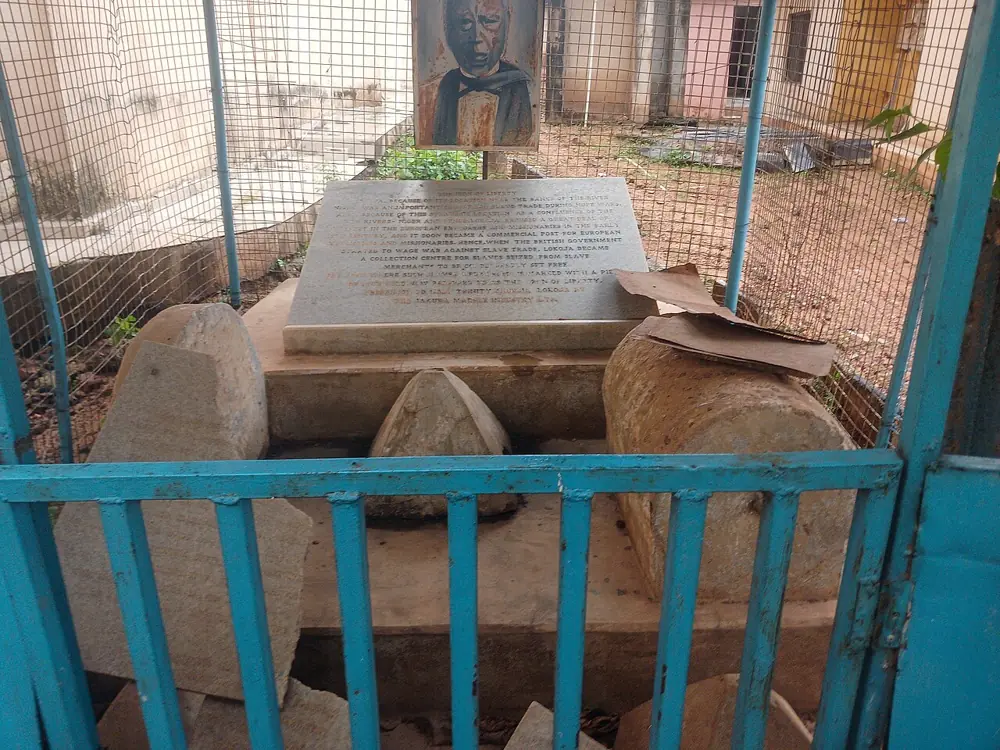
Later the town became a place of release instead. Accounts tell of captives taken from slave traders, brought to Lokoja and set free. The Iron of Liberty marks where that happened.
The iron stands in the compound of Holy Trinity church and school. The name tied to it is Bishop Samuel Ajayi Crowther, the Yoruba boy who was sold as a slave, freed at sea, and grew up to become the first African Anglican bishop. He spent his life fighting the trade. His portrait is part of the memorial.
Next door is Holy Trinity School, also called Crowther's school, opened in 1865 and said to be the oldest primary school in northern Nigeria.
So children run past the iron on their way to class every day. Reports say Lokoja's old buildings are being neglected, and the memorial needs care too. It marks the place where people hoped one touch would end their slavery.