People · 1917-1954
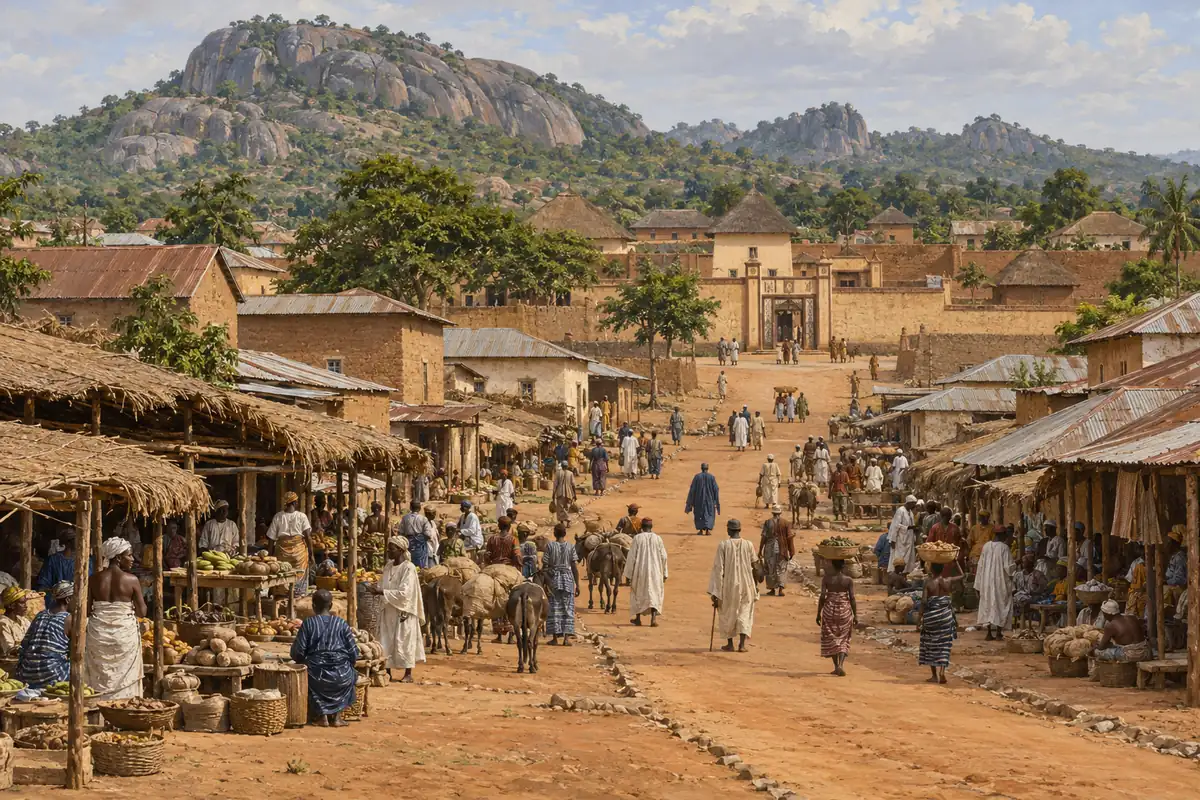
Image: Generated illustration — Generated with an AI image tool for this site, Generated illustration, not a historical image
A trader's son helped bring schools, roads and water to Okene, but his powerful throne also drew resistance.
Ibrahim Onoruoiza grew up between two teachers. His mother was a successful trader who travelled widely, and from her he learned how to read people. His grandfather, Omadivi, was a leader, and from him he learned how to lead them.
He also picked up languages: Hausa, Nupe and more. When the British arrived in Ebiraland, a young man who could talk to everyone was very useful. Ibrahim became their interpreter and messenger.
In 1917 they made him Attah of Ebiraland.
This was something new. Ebira communities had always had their own local leaders. The British wanted one man they could govern through, and they gave Ibrahim more power than any Ebira ruler before him, his grandfather included. Many communities were not pleased.
He used that power to change Okene. He built roads, so traders could move goods. He opened a Native Authority school. In 1937 he built a dam to bring the town water. Courts and a prison followed. For an ordinary family, that meant less walking for water and a classroom for the children.
He believed in school for his own family too. He sent his children to study in Nigeria and abroad, and several went on into public service.
Power like his was bound to be challenged. By the 1950s people were demanding more say in how they were governed, and Ibrahim was also quarrelling with the British who had made him. In 1954, after thirty-seven years, his reign came to an end.
Okene still carries his mark: the roads, the school, the water. So does its politics. He was the chief who built the modern town, and the chief people pushed back against. Both are true.